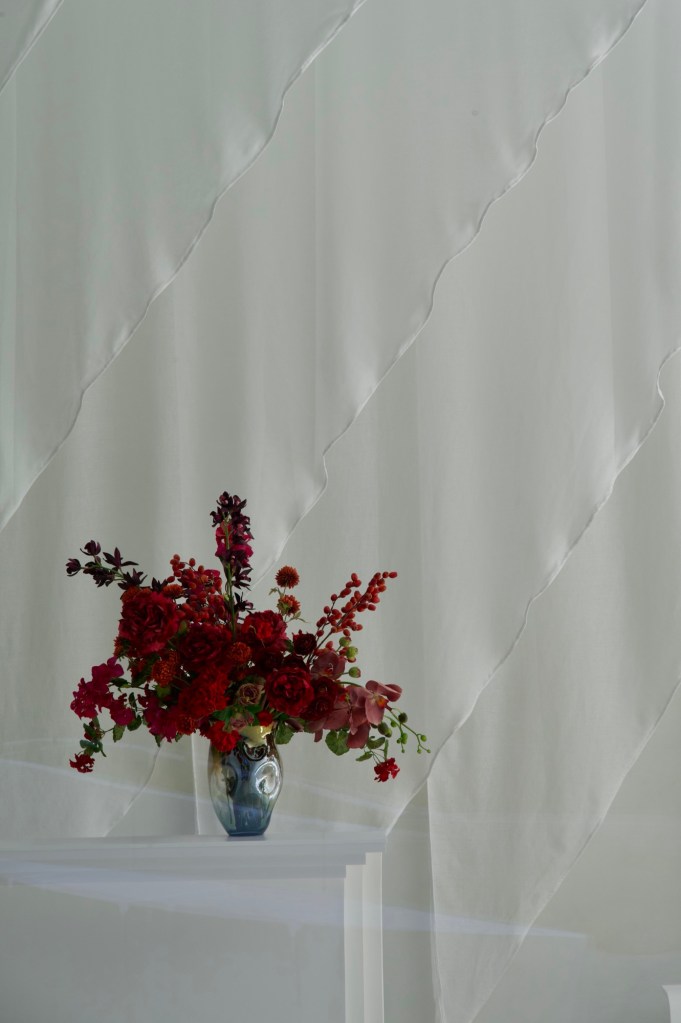
The wall offered a whisper; the bloom answered in blood, and between the pale drape and the dark stem, silence chose not to survive.
Instead, it woke in crimsons, plums, and scarlets, a slow pulse breathing life into every petal. In their stark contrast, simplicity and violence marry, complementing one another like an ink stained story written across a blank page.
Subtle yet bold the blossoms tell a story of romance and mystery. Of darkness against the light, of life against death.
They ask for nothing. Yet share so much.
Silent they stand. Bringing life to whomever dares drink their intoxicating perfume. Bringing death to those who consume too much.
Stark they stand awaiting your stare. Awaiting your touch, your dreams, your desires.
The flowers aren’t just arranged; they are an altar to appetite, where beauty ceases to be polite and becomes an invitation to drown. To lust, and just as the flowers will wilt, decay and crumble to dust such is life.
There is something about the night sky that has always drawn me in. The stars. The darkness. The vastness of it all.
And, perhaps strangely, the night is also something that fills me with extreme anxiety.
Sometimes my nighttime anxiety is so intense that simply being outside after dark can feel overwhelming. It’s paralyzing. Other times, the anxiety is there in the background high enough to make everything feel a little harder. The night can be both beautiful and frightening for me.
And yet, I keep looking up.
I’m no professional astrophotographer. Not even close. But I absolutely love photographing the stars above me. There is something magical about pointing a camera toward a seemingly ordinary patch of sky and discovering that it isn’t ordinary at all.
Deep-sky objects especially fascinate me. Nebulas. Galaxies. Distant clouds of gas and dust. Objects so incredibly far away that the light reaching my camera may have been travelling for thousands, millions, or even billions of years.
For a long time, though, I assumed that truly exploring and photographing those objects was simply something I wasn’t going to be able to do.
Astrophotography can become an incredibly expensive hobby. Telescopes, cameras, mounts, guiding equipment, computers, cables, adapters. the list can seem endless. Building a serious astrophotography setup can cost far more than I could realistically justify.
But money wasn’t the only obstacle.
I also live with concentration and memory difficulties. Elaborate setups involving numerous pieces of equipment, complicated procedures, and a maze of wires aren’t particularly accessible to me. Even if I somehow managed to afford the equipment, I knew that trying to remember all the steps and keep everything working together could turn something I love into something incredibly frustrating.
Eventually, I reached what felt like a rather painful conclusion: As much as I wanted to spend my nights photographing the universe, perhaps it just wasn’t in the cards for me.
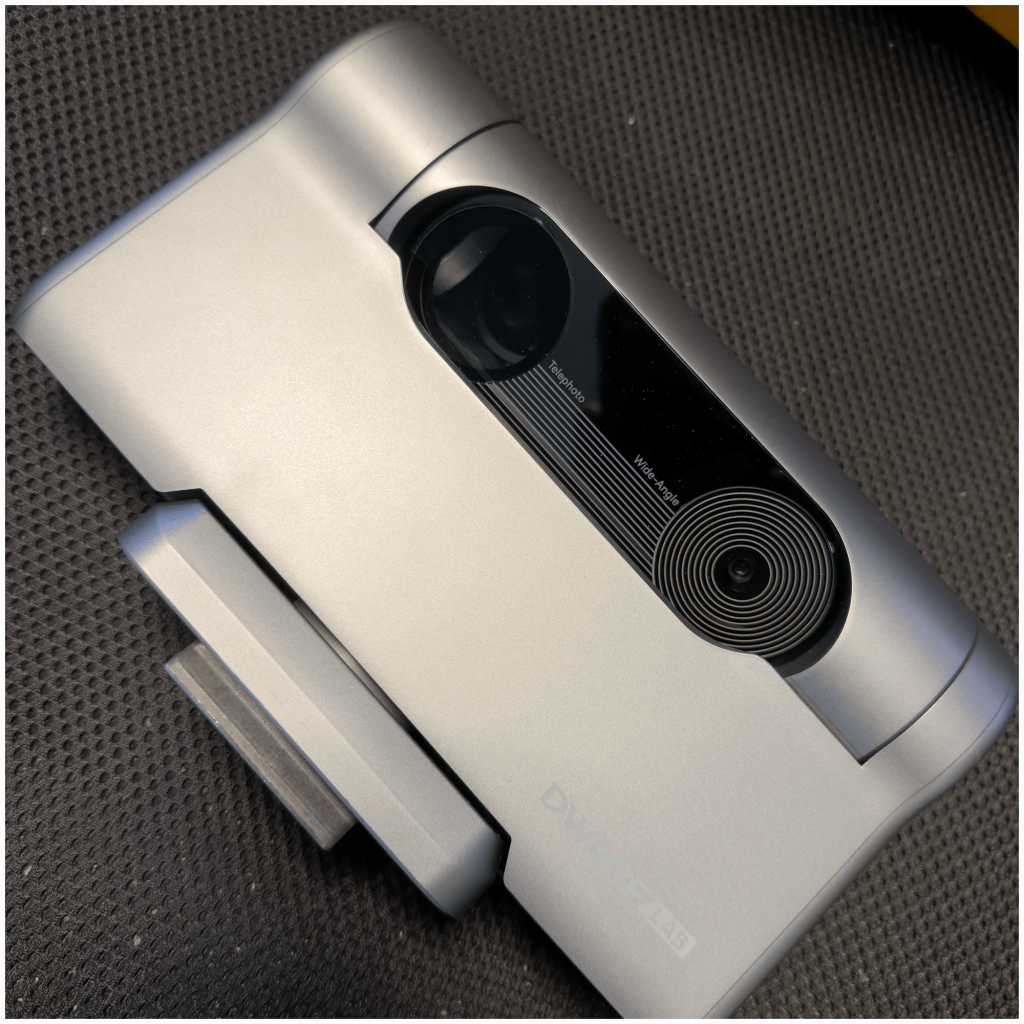
And then a friend changed my mind. He introduced me to Dwarf Labs and showed me his Dwarf 3.
Dwarf Labs Dwarf 3
A tiny telescope that doesn’t even look like a traditional scope.
I watched him use it. He explained how it worked and, more importantly, showed me what this little telescope was actually capable of.
I was intrigued. Here was something that didn’t require the enormous collection of equipment I had always associated with astrophotography. No confusing mass of wires. No giant collection of hardware that I would have to learn how to assemble and operate and the price point was actually within the realm of possibility for me.
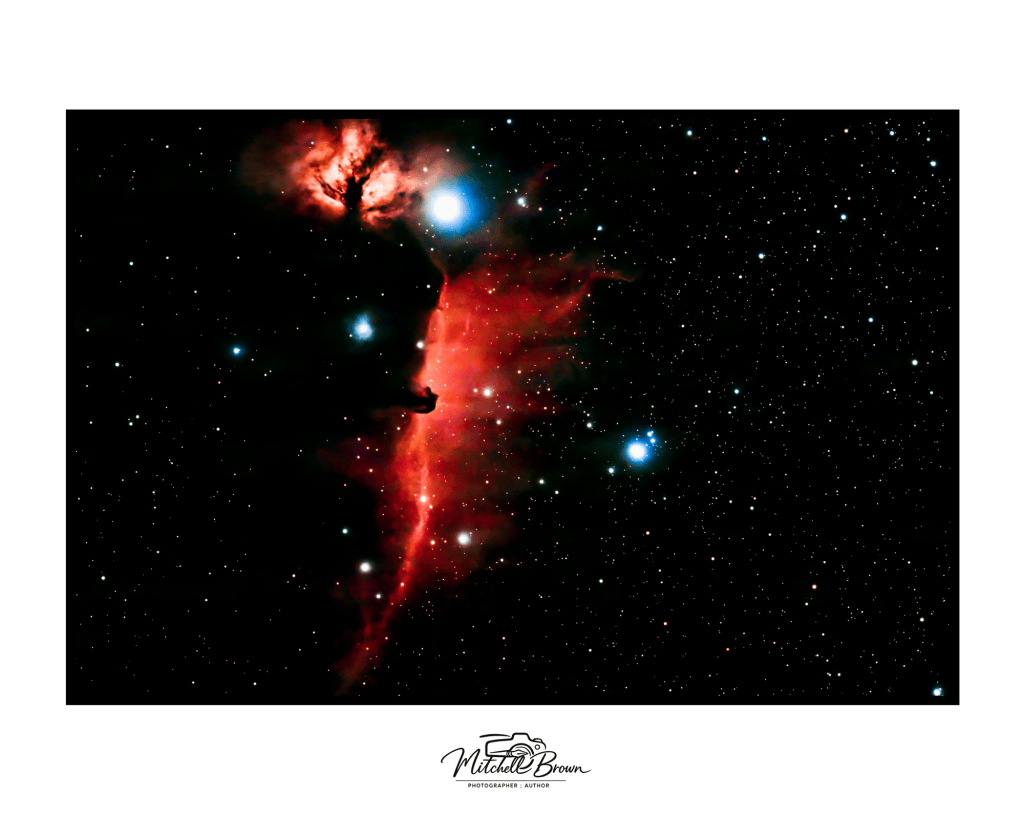
Horsehead Nebula
For the first time in a long time, astrophotography didn’t feel completely out of reach. So I started saving my pennies.
Eventually, I bought a Dwarf 3 and I couldn’t be happier that I did. It hasn’t magically made my anxiety disappear. The night can still be difficult for me. There are still evenings when anxiety wins and I stay inside.
But now, when I can get outside, I have a way to explore the sky that works for me. That’s something I don’t take for granted.
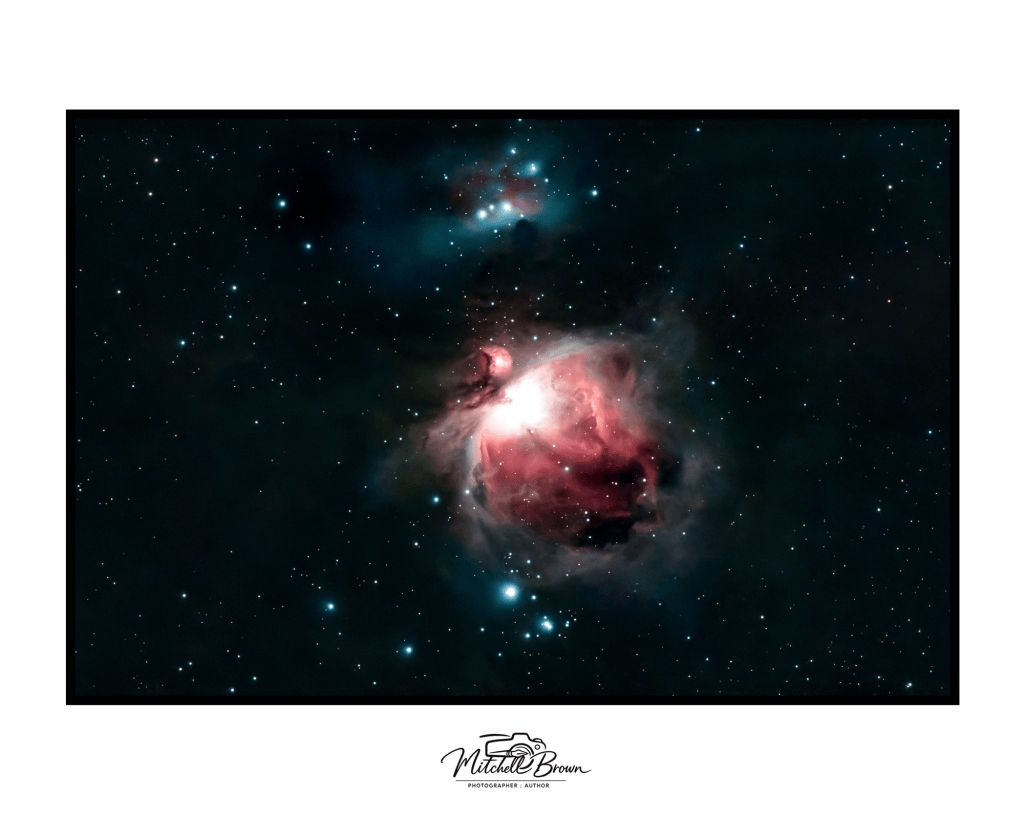
Orion Nebula
I can look up at the stars and know that I don’t need a professional observatory, thousands of dollars of equipment, or an encyclopedic memory of astrophotography procedures to experience a little bit of that wonder.
I can simply set up my little telescope, point it toward the sky, and see what I can find and sometimes, that means discovering a nebula. Sometimes it’s a galaxy. Sometimes it’s simply a beautiful field of stars.
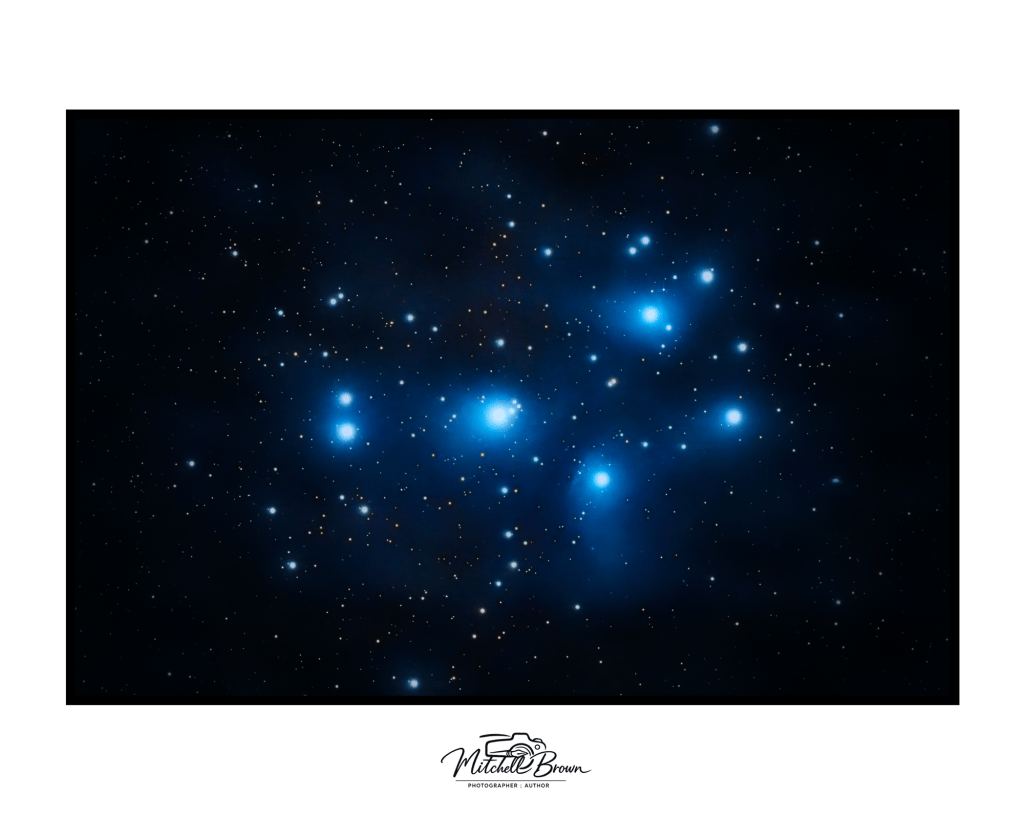
The Seven Sisters
But every once in a while, it’s something more important. It’s a reminder that something I had convinced myself was no longer possible is possible just perhaps in a different way than I originally imagined and I have Dwarf Labs to thank for that.
The universe hasn’t changed. My limitations haven’t magically disappeared, but the way I reach for the stars has changed and for me, that’s pretty incredible. Maybe that’s one of the things I love most about astrophotography.
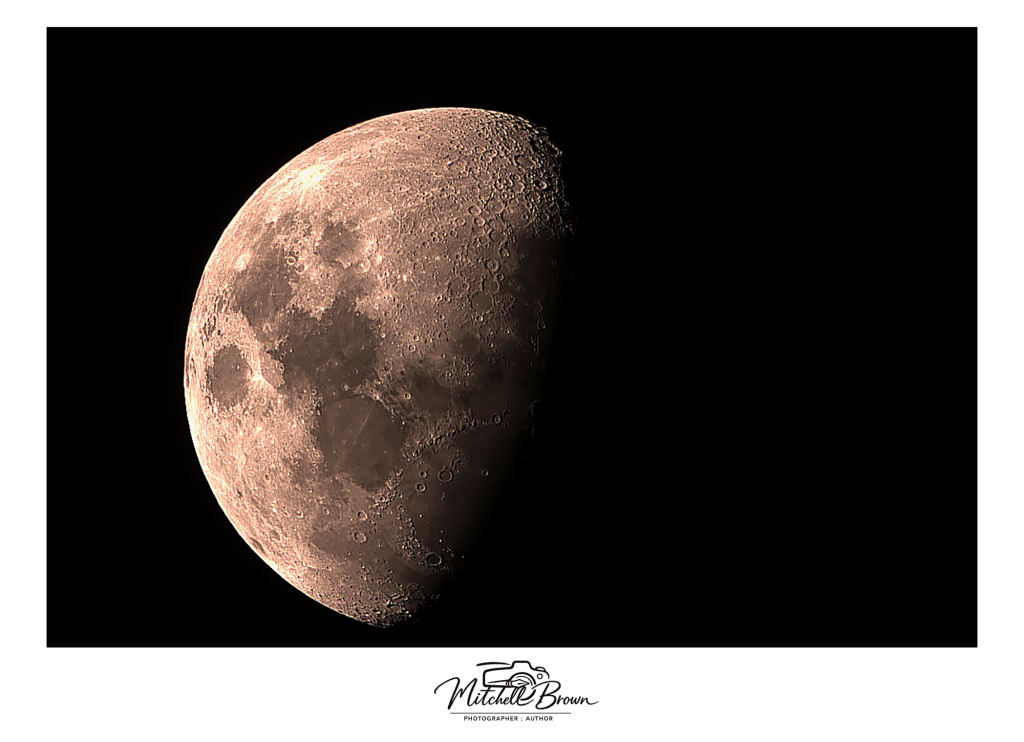
The Waxing Moon
It’s not just about capturing distant galaxies or beautiful nebulae. It’s about finding a way to experience something that makes me feel small in the best possible way.
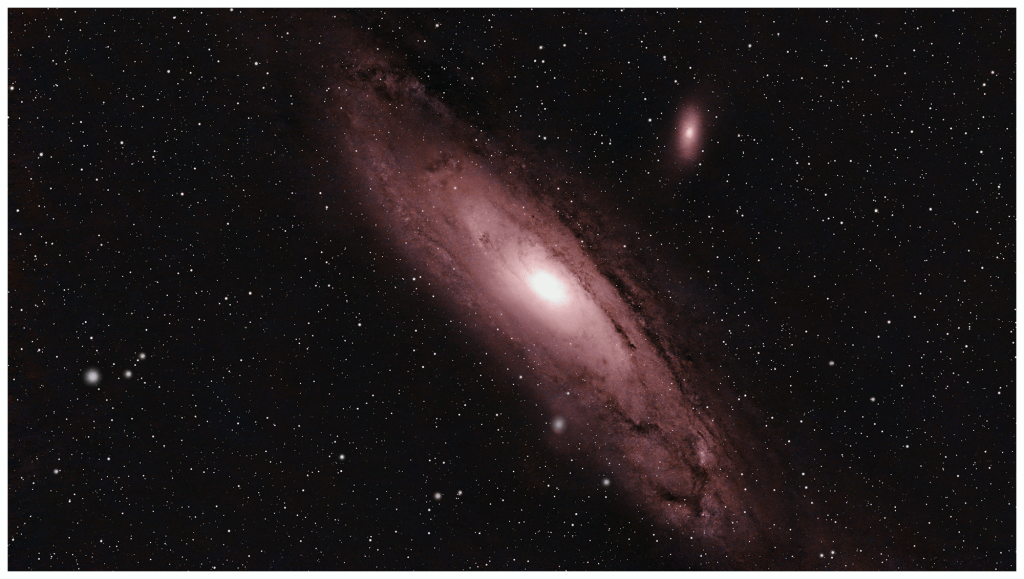
Andromeda Galaxy
To look into that enormous darkness and discover that it’s actually filled with light and on the nights when anxiety is particularly loud, sometimes I need that reminder more than anything.
Thank you Saeed and thank you Dwarf Labs for giving me a tool that enables me to discover the absolute awe of the night sky.
Check out all of Dwarf Labs Smart Telescopes out on their website
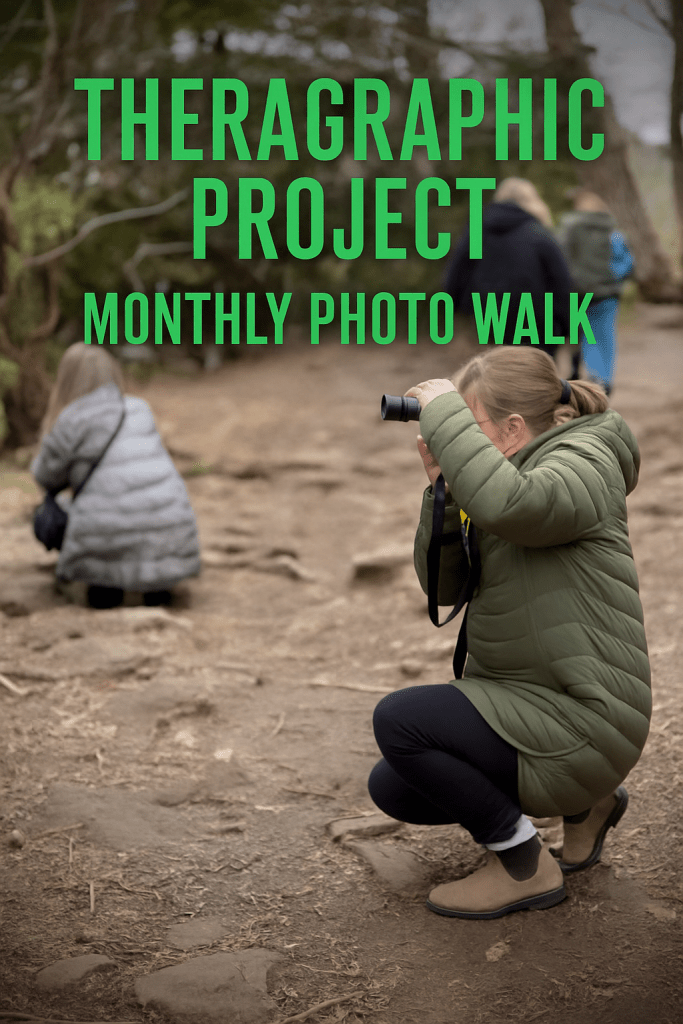
The photowalk is SATURDAY AUGUST 22 at 9am. sorry for the error on the date in my previous email..
This month’s photo walk is quickly approaching!
I’ll be at Beamer Memorial Conservation Area next Saturday, the 22nd, at 9:00 AM. We’re starting an hour earlier this month because I have an afternoon commitment.
Come join me! Bring your camera, your cellphone, or simply bring yourself and enjoy the morning. You don’t need expensive gear or any photography experience. The goal is to get outside, slow down, notice what’s around us, and capture a few moments along the way.
Nature photography gives your mind somewhere else to go.
When you’re looking through a viewfinder or your phone camera, you start paying attention to things you might normally walk right past. the light through the trees, a bird perched on a branch, insects moving through the grass, or the patterns and textures in nature.
That intentional focus can help quiet the mental noise, get you out of your own head, and bring you into the present moment.
You don’t have to take a great photograph. You don’t even have to take a photograph at all.
Just being outside, moving your body, breathing fresh air, and deliberately looking for something beautiful can be a powerful reset.
For me, that’s what photography is about: getting outside, chasing the light, and finding those little moments that remind us there is still beauty all around us.
So come walk with us.
DON’T FORGET THE BUG SPRAY!
I was at Beamer’s the other morning and the mosquitoes were BRUTAL.
Quick Photography Tip…
Don’t spray bug spray directly onto your hands before handling your camera.
Bug spray can damage or deteriorate some camera body coatings, rubberized surfaces and grips. Spray it onto exposed skin first, let it dry, and then handle your camera.
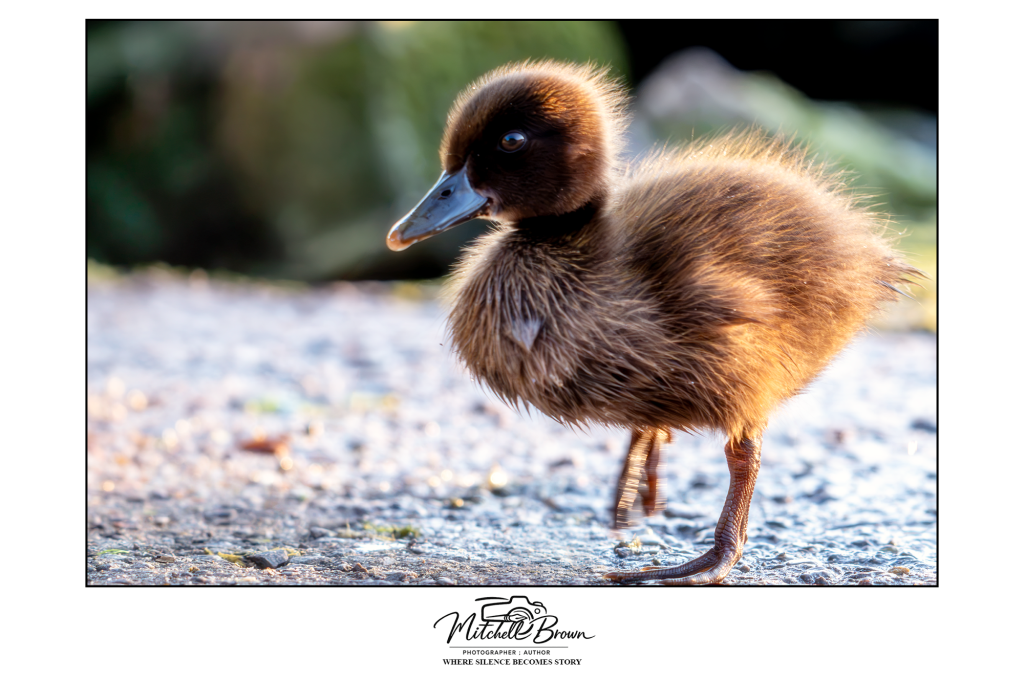
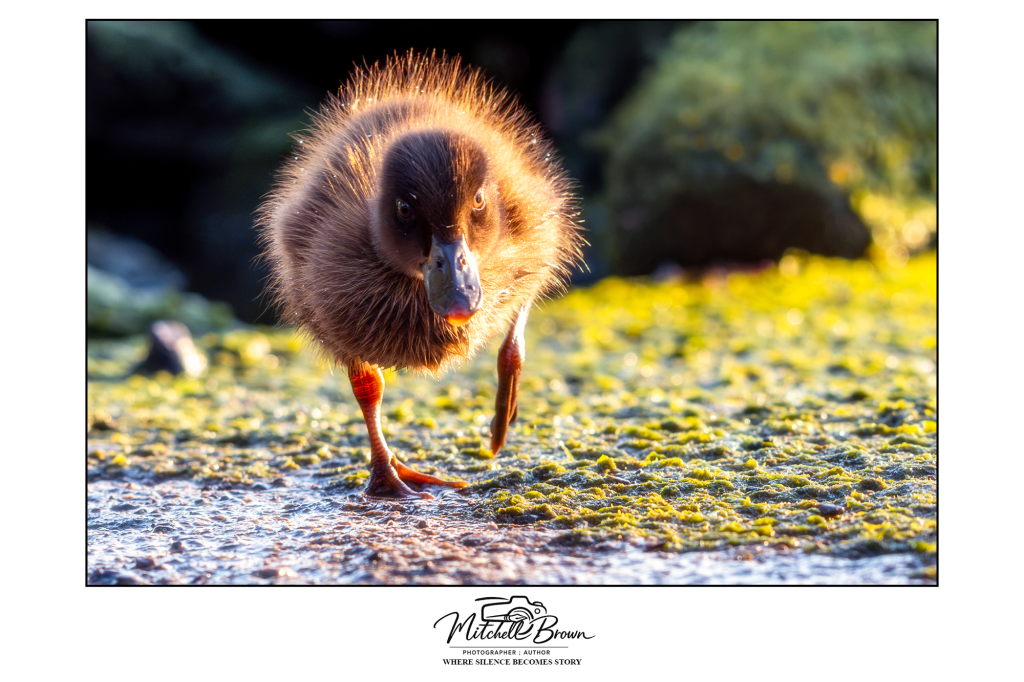
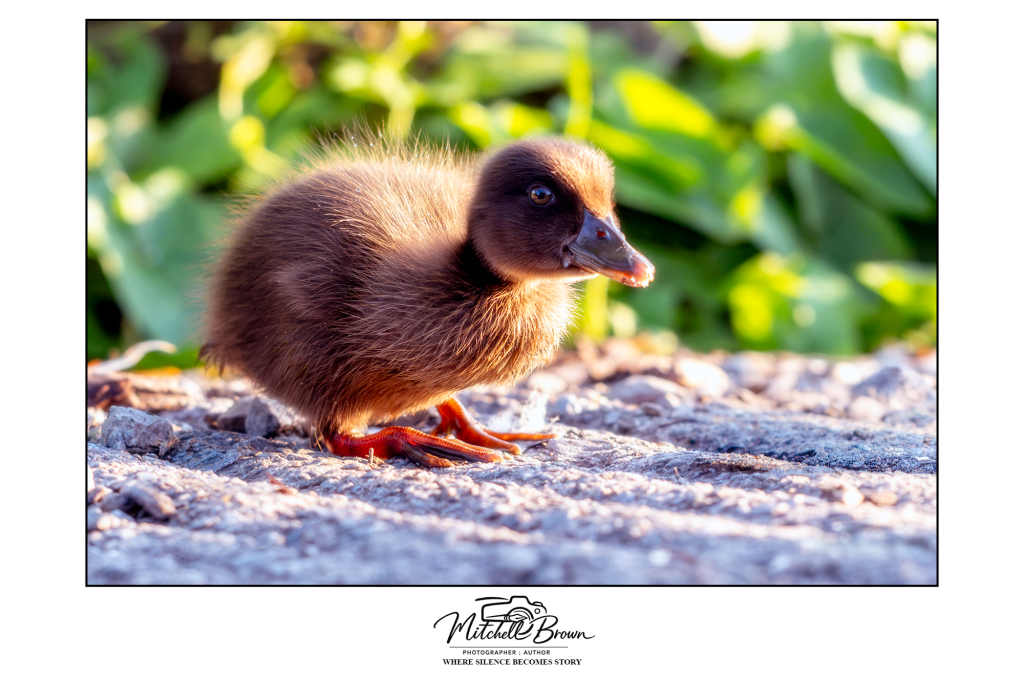
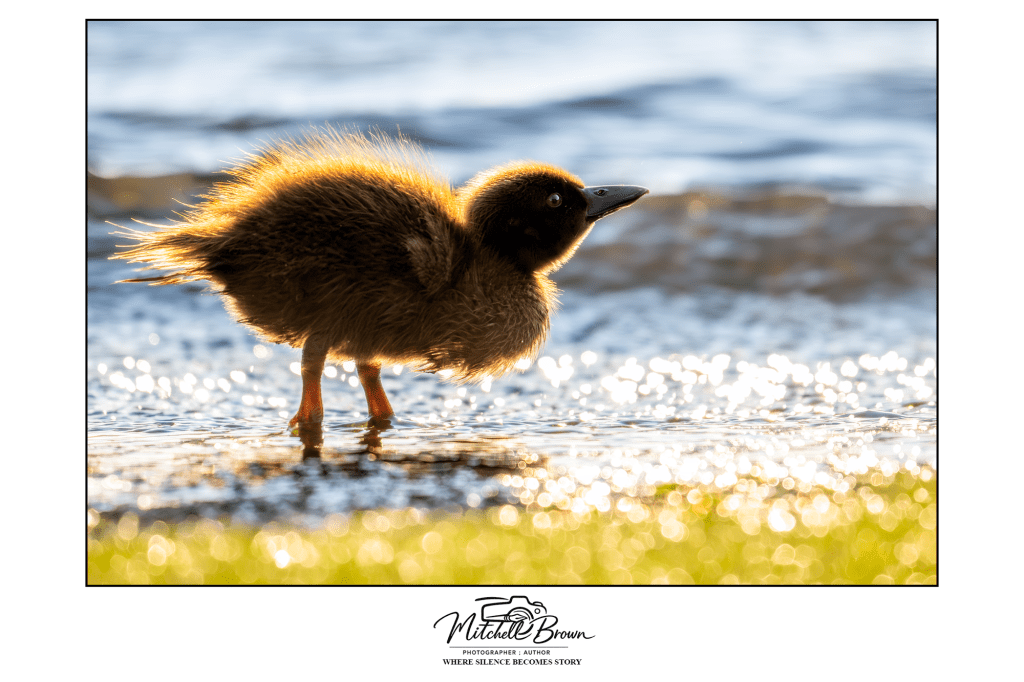
Good morning folks. As photographers, we’re often chasing dramatic light or rare species. But sometimes the most memorable moments come from noticing that one individual that dares to be different.
I knew there was a rare coloured gosling and I spent a little over a week to see it and the opportunity to photograph it. Yesterday morning was the time. Dramatically lit by the rising sun this Chocolate Brown Mallard gosling strutted its stuff in and about with its yellow and white siblings.
From what I’ve learned, this unusual colouring is likely the result of a rare genetic variation.
I don’t know if this little duckling will keep its chocolate colouring as it grows or if it will eventually resemble the rest of the flock. That’s one of the beautiful mysteries of nature.
For now, I’m simply grateful to have witnessed and photographed a small reminder that the natural world still has plenty of surprises waiting for those willing to slow down and look closely.