
In our fast-paced, always-on world, it’s easy to forget that some of the most powerful tools for healing, clarity, and resilience aren’t found in screens or prescriptions — they’re found just outside our doors.
Nature isn’t just a backdrop. It’s a balm.
And when we spend time in it — especially with intention — we begin to remember something ancient and essential: we are part of something bigger than us.
The mental and physical health benefits of spending time in nature are well documented. Just a short walk outdoors can help reset your nervous system, boost your mood, and clear your mind.
Here are some science-backed benefits of being in nature:
• Reduced stress: A 2019 study in Frontiers in Psychology found that just 20 minutes in a natural environment significantly lowered cortisol levels — our body’s primary stress hormone.
• Improved mental clarity and emotional well-being: Time in green spaces is linked to lower levels of anxiety, depression, and rumination, and higher levels of cognitive function and creativity.
• Stronger immune system: Exposure to natural environments — especially forests — increases the activity of natural killer (NK) cells, which help defend the body against infection and illness.
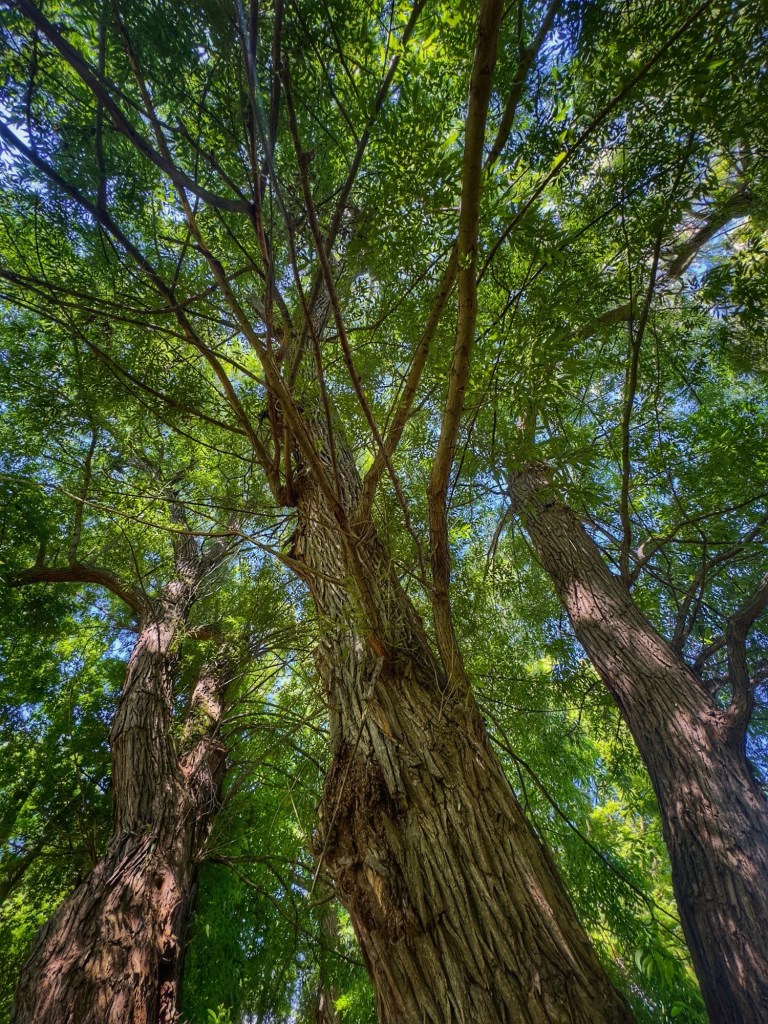
One of the most profound nature-based practices to emerge from this research is something called forest bathing.
Forest bathing, or Shinrin-yoku originated in Japan in the 1980s as a form of preventive health care. But it’s not about hiking or logging kilometers.
It’s about slowing down.
Being present.
Breathing in the forest air.
And simply being in nature with your senses fully awake.
You’re not trying to reach a destination. You’re letting the forest come to you.
Researchers have found remarkable benefits tied specifically to forest bathing:
• Lowered blood pressure and heart rate
• Reduced activity in the sympathetic nervous system (your fight-or-flight mode)
• Increased activity in the parasympathetic nervous system, which promotes relaxation and healing
• Boosted immune function, including a rise in anti-cancer proteins
• Improved sleep and emotional regulation
One fascinating element is the role of phytoncides — organic compounds released by trees. These airborne chemicals not only help protect trees from insects and disease, but also help us when we breathe them. Beyond the physical and mental health benefits, nature offers something more personal: perspective.
When you walk into a quiet forest or sit beside a flowing creek, you start to notice the world is moving at a different pace — and you begin to match it.
The rhythm of nature is slow, patient, and deeply alive.
It reminds us that it’s okay to slow down. To breathe. To simply be.
Nature has a way of holding up a mirror — helping us see ourselves more clearly, and with a little more compassion.
You don’t need a deep forest or a weekend getaway to experience the benefits. Start small:
• Take a slow, device-free walk in a local park or green space.
• Pause often and tune into your senses: What do you hear? Smell? Feel?
• Sit under a tree for 10 minutes and observe without judgment.
• Breathe deeply. Let your surroundings anchor you in the present.
This isn’t about doing it “right.” It’s about showing up.
⸻
In a world where mental health struggles are increasingly common, the natural world offers a powerful — and free — source of healing.
Forest bathing isn’t a trend. It’s a return.
A return to our relationship with the living world.
A return to ourselves.
So take a step outside. Let the forest remind you of the quiet strength that’s always been there — in the trees, in the air, and in you.

 The Theragraphic Project